lunes, 30 de septiembre de 2013

Europe is leading DCIM adoption (analyzing two recent DataCenter research surveys of Uptime Institute and IDC)

In a recent post (titled “Third-Party DataCentres are becoming increasingly attractive rather than Enterprise DataCentres, according to a recent Uptime Institute’s Survey“) I refer to the The Uptime Institute’s Data Center Industry Survey” (2013): http://uptimeinstitute.com/2013-survey-results. Among other points, that survey analyzes DCIM software adoption and show that is high this year, reaching a 38% among respondents, with the major driver being capacity planning; however in 2012, in spite of enormous interest in and that a fair percentage were already using tools that could be described as DCIM, there was no single concerted focus on what DCIM needed to be deployed.
 
DCIM-Level of adoption-by-Uptime Institute
 
 
Besides the adoption rate is even higher in Europe, which leads global DCIM adoption at nearly 50%. Also, large organizations and colocation companies have adopted DCIM in the 50% range.
 
As Uptime Institute recognizes, both industry-watchers and DCIM vendors have suggested that 38% adoption is too high. So where is the discrepancy? 2 facts could clarify the subject according to The Uptime Institute:
  • Uptime Institute’s audience base tends to be larger, more advanced data center owners and operators – Uptime Institute Network members, Tier-certified         data center owners, etc. – therefore, more likely to be ahead on leading-edge technology adoption.
  • Also, the term DCIM has been used to include anything from a home-grown system of spreadsheets and monitors, to an advanced suite of fully integrated tools spanning multiple data centers.
Please, let me analyze the latter point. In order to solve the problem, this year Uptime Institute provided respondents with 451 Research’s definition of DCIM before the question, in order to provide clarity:
DCIM is defined as a data center-wide or organization-wide system or suite that collects and manages information about a data center’s assets, resource use and operational status.
By the way I think Gartner’s definition is quite better and clarifying:
DCIM is the integration of information technology and facility management disciplines to centralize monitoring, management and intelligent capacity planning of a data center’s critical systems. It enables a common, real-time monitoring and management platform for all interdependent systems across IT and facility infrastructures. (Note: Therefore, it enables the monitoring and collection of low-level infrastructure data to enable intelligent analysis by individuals with domain expertise (e.g., capacity planners and facilities planners), as well as holistic analysis of the overall infrastructure, and in consequence, a full DCIM solution provides detailed monitoring and measurement of data center performance, utilization and energy consumption, supporting more-efficient, cost-effective and greener environments).
So, The Uptime Institute asked respondents specifically to exclude spreadsheets, BIM-type drafting programs and basic BMS systems. But I think do not eliminate partial solutions without intention or possibility to afford the whole dimension of DCIM.
 
 
Now let me introduce a new survey, carried out by IDC and this is summarized in the infographic that you can find here.
 
DCIM-Unified management-by-IDC
 
 
According to IDC survey 92% of DataCenter manager see DCIM as the solution to traditional DC problems:
  • Inconsistent Data Information.
  • Divided Data Center Operations.
  • Inconsistent Data Center Maturity.
DCIM-traditional DC problems-by-IDC
 
And those problems result in that 84% of data centers have had issues with power, space, cooling capacity, assets and uptime. These issues went on to negatively impact the business process:
  • 31% – Delay in application rollouts
  • 30% – Disrupted ability to provide service to customers
  • 27% – Forced to spend unplanned OPEX budget
  • 26% – Need to roll back an application deployment.
 
In the other hand, coming to the Uptime Institute survey and concretely to one of the points stated in the first paragraph of this post, 70% of respondents listed “improving capacity planning” as a top driver for buying DCIM. All other drivers were distant runners up. Capacity planning mistakes will be expensive, and could cripple a business. The industry is hungry for any solution that will help make this exercise less of a guessing game. Also, in second place (a 30%), is concerned with indentifying availability threats in advance:
 
DCIM-adoption drivers-by-Uptime Institute
 
And when asked about the features wished in DCIM the responses were:
 
DCIM-Level of adoption of features-by-Uptime Institute
 
Answers that fit perfectly with the survey done by IDC that concludes that about 70% of respondents wish the next 4 functionalities:
  • Real-time monitoring, including power and temperature
  • Alerts and alarms for power and cooling
  • Inventory and asset management
  • Capacity analysis and planning
DCIM functionalities desired-by-IDC
 
Finally, changing the subject, concerning to barriers to adopt DCIM Over 60% of Uptime Institute respondents globally said cost was the primary barrier to DCIM adoption, and the second one (but with a 37%, i.e. far from the first one), the integration of DCIM with the existing systems:
 
DCIM-adoption barriers-by-Uptime Institute
 
And the fact is that while small companies are deploying inexpensive DCIM tools (48% report spending less than $100k), the largest companies are spending significantly more for scalability and features (24% report spending over $300k):
 
DCIM-cost for purchase-not subscription-by-Uptime Institute
 
Note: in the above tables cost doesn’t reflect the investment in human resources needs (from training to specialized technicians and so on).

miércoles, 18 de septiembre de 2013

Tissat resulta adjudicataria del Acuerdo Marco 27/2012 para la contratación de Servicios de Alojamiento de Sistemas de Información

Tissat ha sido homologada por la Dirección General de Patrimonio para actuar como proveedor de servicios en contratos con la administración pública en base al actual catálogo de servicios 27/2012. Esta nueva adjudicación le permite trabajar con la administración pública como proveedor de servicios relacionados con el Alojamiento de Sistemas de Información (housing, hosting dedicado, hosting virtual, Cloud…).
 
Este éxito se fundamenta en que Tissat gestiona y opera en estos momentos 5 DataCenter:
  1. “Walhalla”, sito en Castellón, certificado como Tier IV por The Uptime Institute.
  2. “Parc Tecnologic”, sito en Paterna (Valencia), Tier III.
  3. “Brasil”, sito en Madrid.
  4. 112-RM, sito en Murcia.
  5. 112-CV, sito en L’Eliana (Valencia).
De ellos los 3 primeros son de su propiedad, y los 3 han sido homologados dentro del Acuerdo Marco 27 de Catálogo de Patrimonio (“Servicios de Alojamiento de Sistemas de Información”) que se acaba de adjudicar hace unos días, obteniendo además el primer puesto en la evaluación, y que contempla principalmente los siguientes servicios:
  • Servicios de alojamiento de sistemas de información (housing, hosting dedicado, hosting virtual, cloud hosting, etc.).
  • Servicio de puesta en marcha asociado a los servicios de alojamiento.
  • Servicio de respaldo y recuperación asociado a los servicios de alojamiento.
  • Servicio de comunicaciones asociado a los servicios de alojamiento.
  • Servicio de monitorización asociado a los servicios de alojamiento.
  • Servicio de explotación asociado a los servicios de alojamiento.
  • Servicio de seguridad asociado a los servicios de alojamiento.
  • Servicio de estadísticas e informes.
 
Por otra parte, el diseño de estos 5 centros DataCenter ha sido realizado también por Tissat. De la calidad de los diseños de Tissat da fe los premios que ha obtenido, así por ejemplo la revolución que supone Walhalla queda avalada por la obtención en Diciembre del 2010 en Londres del prestigioso premio “Innovation in the medium Date Centre” en los Data Centre Leaders Awards, gala en la que se encuentran cada año los proyectos más innovadores y las apuestas más rompedoras del marco europeo de los Centros de Procesos de Datos. Además, Tissat no sólo obtuvo un galardón, sino que también quedó finalista en la categoría de “The Green Data Centre”, hecho que demuestra el enorme compromiso de Tissat con el Medioambiente y su apuesta por el ahorro energético, como lo demuestra el PUE de 1,15 con el que opera Walhalla.
 
Además Tissat ha certificado la gestión y las operaciones de todos sus DataCenter de acuerdo a las siguientes normas:
  • ISO 20.000
  • ISO 27.001
  • ISO 50.001
  • ISO 14.001
  • ISO 9001
  • EU Code of Conduct for DataCentres.
  • Y la reciente (publicada a primeros de año) AENOR EA 0044:2013, que certifica la sostenibilidad energética de un CPD, y que hemos sido los primeros en obtener.
 
En palabras de la Directora de Tissat Madrid, Carmen García, “con esta adjudicación Tissat se sitúa a la vanguardia de las mejores compañías TIC a nivel nacional y demuestra una vez más su capacidad y solvencia financiera, tecnológica y profesional pues la evaluación de nuestros DataCenters y servicios ha superado todos los criterios de evaluación con Matrícula de Honor”. 

jueves, 12 de septiembre de 2013

Third-Party DataCentres are becoming increasingly attractive rather than Enterprise DataCentres, according to a recent Uptime Institute’s Survey

The Uptime Institute, a division of The 451 Group, recently has published the results of its third annual “Data Center Industry Survey” (2013). The survey was developed to collect data on an annual basis around Digital Infrastructure deployment trends, procurement plans, operations and management practices, and other topics that impact the mission-critical data center industry.
Note: You can get a free copy of 2013 report at http://uptimeinstitute.com/2013-survey-results and the 2012 one at http://uptimeinstitute.com/2012-survey-results.
 
This year, the survey  gathers responses  (during spring 2013) from 1,000 data center facilities operators, IT managers and senior executives from around the world (mainly from North America but with a growing number from Europe, Asia and Latin America) and most of them have responsibilities for more than one site. The survey covers different areas as DC budgets, Cloud Computing, Energy Efficiency and Green certifications, DCIM adoption, and so on.
 
It shows consolidation in tendency in most areas but also some surprising trends changes:
  • The global average of the PUE numbers the respondents were seeing was reported to be at 1,65, a great reduction from the 1,98 reported in 2012 survey, or the one of 2.5 reported in 2011.
  • The percentage of companies pursuing green data center certifications like US Green Building Council’s LEED program or Energy Star grew from 48% in 2012 to 58% in 2013.
  • Furthermore, the survey found that Enterprise public cloud adoption rose from 10% in 2012 to 17% in 2013, however private cloud adoption decrease slightly: only 44 per cent deploying private clouds this year, compared with 49 per cent in 2012. According to survey “This seems to suggest that the companies who could make use of a private cloud platform have made the investment, and companies on the fence are either going to public cloud or walking away from the hype cycle” . It also said that large enterprises are almost twice as likely to implement public clouds than smaller enterprises.
  • Prefab modular DC designs are on the slide: 53% of respondents said no interest from the last year 42%; and adoption is still around 8% as in the 2012 survey (however 2012 doubled 2011).
  • Reported DCIM software adoption is high, a 38% among respondents, with the major driver being capacity planning. (Note: however in 2012, in spite of  enormous interest in and that a fair percentage were already using tools that could be described as DCIM,  there was no single concerted focus on what DCIM needed to be deployed).


However, probably, the new and most significant result found is that are the most significant DataCenter budget grow is occurring in the “third party” companies (77% of third-party data centre providers said they had received large, 10% or more, year-over-year budget increases this year, compared with just 47% of enterprise data centres), reflecting a shift in spending away from enterprise-owned data centres and toward outsourced options. According to Matt Stansberry, Uptime Institute director of content and publications, “This isn’t the end of the enterprise-owned data centre, but it should serve as a wakeup call. Going forward, enterprise data centre managers will need to be able to collect cost and performance data, and articulate their value to the business in order to compete with third-party offerings”.
 
Note: The Uptime Institute defines “third party” in this surveys as “companies that provide computing capacity as service in any form” (SaaS or other cloud computing services, multi-tenant collocation, or wholesale DC providers).

martes, 23 de julio de 2013

The European Standard for Innovation Management (UNE-CEN/TS 16555-1:2013) has been recently published

On June, 2013, was approved the UNE-CEN/TS 16555-1:2013, the European Standard for Innovation Management, and finally on July, the 4th was finally published.
 
As Oana-Maria Pop (Senior Editor of IM) stated at the beginning of this year: “As evidence suggests, innovation – both as a field of study and as a practical discipline – has gained considerable traction over the past 15 years. As organizations become broader and more complex, the need for a systematic approach to new product, service or business development techniques strengthens accordingly. And this is merely the tip of the iceberg – there are multiple insights on why communities can benefit from an organized approach to innovation – a process at the heart of our everyday (business) lives. As of today, this approach is becoming a reality and work slowly progresses towards the creation of a unified Innovation Management Standard. Why the delay? Plainly because relating innovation to standardization is something most practitioners still find counter-intuitive”.
 
But that work successfully concluded this last June. In that successful result some stakeholders and supranational bodies such as AENOR in Spain and SIS in Sweden were crucial, integrated and collaborating inside the CEN/TC 389 Innovation Management technical committee, that was created (by CEN) in November 2008 to support a culture of innovation in Europe and accelerate the access of innovation to both domestic and global markets. Note: similar to the worldwide ISO, at the European level, Brussels-based CEN (the European Committee for Standardization) is the solely recognized organization for the planning drafting and adoption of European Standards in all major areas of business except electro-technology and telecommunications.
 
Concretely, the Spanish standard UNE 166002 (Gestión de la I+D+i) was published by AENOR in 2006 and bring a consistent set of guidelines on which the new European Standard has been built. Now AENOR is working in adapting (light changes) its UNE 166002 Standard to fully meet the UNE-CEN/TS 16555-1:2013. TISSAT is certified in UNE 166002 since 2010.
 
This Technical Specification provides guidance on establishing and maintaining an innovation management system (IMS). It is applicable to all public and private organisations regardless of sector, type or size. This document provides guidance on:
-          understanding the context of the organisation;
-          establishing the leadership and commitment of top management;
-          planning for innovation success;
-          identifying and fostering innovation enablers/driving factors;
-          developing the innovation management process;
-          evaluating and improving the performance of the innovation management system;
-          understanding and using innovation management techniques.

By using this document, organisations can increase their awareness of the value of an IMS, establish such a system, expand their capacity for innovation, and ultimately generate more value for the organisation and its interested parties. Since the innovation management system outlined in this document follows the PDCA structure (plan-do-check-act), so it can be integrated within other standardised business management systems existing in the organisations, e.g. EN ISO 9001, EN ISO 14001, etc. That’s the case of TISSAT, where these 3 Standards are fully integrated.
 
Finally, it should be noticed that the UNE-CEN/TS 16555-1:2013 is part of a family of Standards (on which the TC 389 is currently working on) as shown in the next table:
 
CEN/TS 16555   Standards Family
CEN/TS
Title
Status
Estimated Date
16555-1
Innovation   Management – Part 1: Innovation Management System
Published
2013-07
16555-2
Innovation   Management – Part 2: Strategic Intelligence Management.
Draft
2014-12
16555-3
Innovation   Management – Part 3: Innovation Thinking
Draft
2014-12
16555-4
Innovation   Management – Part 4: Intellectual Property Management
Draft
2014-12
16555-5
Innovation   Management – Part 5: Collaboration Management
Draft
2014-12
16555-6
Innovation   Management – Part 6: Creativity Management
Draft
2014-12
16555-7
Innovation   Management – Part 7: Innovation Management Assessment
Draft
2014-02

jueves, 11 de julio de 2013

TISSAT y GFI suman sus tecnologías para dar soluciones de virtualización en la nube

Tissat, empresa española especializada en el outsourcing de servicios de misión crítica y proveedora de servicios Cloud Computing, ha firmado un acuerdo con la empresa GFI Informática, empresa de Consultoría y Servicios informáticos con presencia internacional, para ofrecer una solución completa a sus clientes.
 
En virtud de este acuerdo, Tissat aportará sus soluciones Cloud en la nube, su infraestructura de referencia, Walhalla, el primer centro de datos español comercialmente disponible con certificación Tier IV y capacidad para ofrecer alojamiento a nivel internacional y su plataforma para dar soluciones cloud.
 
Por su parte, GFI Informática contribuye con su experiencia en desarrollo de software a medida para dotar a esta solución de la integración y mantenimiento requeridos para dar una solución personalizada a cada cliente.
 
En palabras de Carmen García, Directora de Tissat Madrid, “es momento de sumar para poder ofrecer a los clientes la mejor solución y servicio en un sector en el que existe una amplia oferta de tecnologías, muchas veces desconocidas por las empresas para optimizar su gestión y garantizar la máxima seguridad posible”.
 
“El acuerdo que hemos suscrito con Tissat  permitirá a  GFI proporcionar soluciones de Cloud Computing a nuestros clientes, principalmente en entornos que requieren de una certificación especial, en unas condiciones muy ventajosas y competitivas”, ha comentado Javier Uriarte, Director  de Desarrollo de Negocio de GFI.
 
A cerca de GFI Internacional
GFI Internacional es una empresa de Consultoría y Servicios Informáticos con presencia internacional en más de siete países y una fuerte implantación en Francia, donde se ha convertido en una de las marcas más conocidas en el sector de los servicios informáticos. Proporciona soluciones globales y un amplio abanico de servicios avalados por la certificación ISO 9001. www.gfi.es

miércoles, 3 de julio de 2013

Tissat Recertifies its Energy Efficiency and Design in its Data Centers and Reobtains the ISO 50001 Standard

Tissat, leader in the field of Data Centers and owner of Walhalla, the first Tier IV Data Center offering these services in Spain, becomes one of the only two companies in Spain that have obtained this quality certification and energy efficiency for its Data Centers.
 
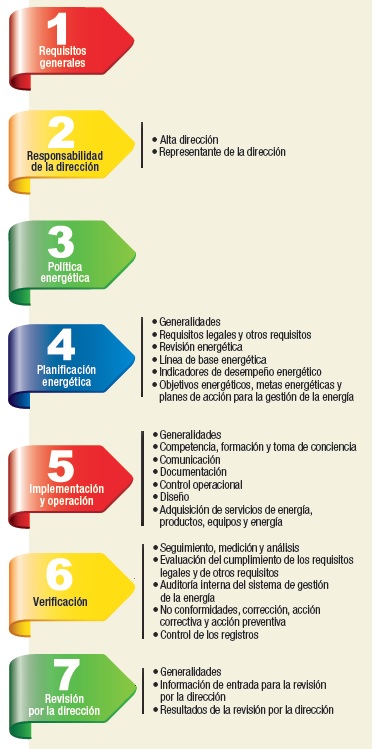
This standard specifies requirements for establishing, implementing, maintaining and improving an energy management system, allowing Tissat to have a systematic approach and thus achieve continuous improvement in energy performance, including energy efficiency, energy security, energy use and consumption. This certificate helps Tissat continually reduce its use and its costs of energy and the emission of greenhouse gases.
 
The application of this standard for about two years as well as the monitoring of the best practices established by the “European Code of Conduct for Data Centers”, along with other measures that accompany and support this standard (ex. DCIM system) have allowed to the Tissat’s Data Center Walhalla reaching a PUE of 1.15, measured according to the strict and continuous level measurement of type 3 defined by ASHRAE, the Green Grid, the Uptime Institute and so on.
 
Note: This TISSAT certification have been recently improved by the AENOR’s EA0044:2013 Data Centres Energetic Sustainability Certification,  that  accredits that a Data Centre accomplishes with the established energy audits, as well as energy and carbon footprint management systems, contributing to mitigate climate change.
 
 
Requisitos establecidos y compromisos adquiridos ISO 50001

miércoles, 26 de junio de 2013

IT evolution boosted by the “Functional Diversity"

For everybody who understands Spanish, I recommend this 10 minute video that review the IT evolution to explain (with subtle humor sense, since the interviewer is Guillermo Fesser, a Spanish humorist, one of members of comic duo “goma-espuma”, i.e. “foam rubber” in English) how initially expensive IT devices developed for handicapped people now have become cheap and commonly used gadgets. At the end, the video claims for the “Functional Diversity” as a new positive concept, instead of disability or handicap, and a revitalizing incentive that boosts innovation.
 
Note: the term “divertad” is an invented word, resulting of contraction of two Spanish words: “diversidad” y “libertad”, used for Javier Romañach (the interviewed human rights activist, who also is an Internet pioneer in Spain) to say goodbye.
 
Hereafter, I quote Javier’s Word:


Un vídeo de 10 minutos para estudiantes de tecnología:
 
 Javier Romañach
Salud y divertad,
Javier Romañach