martes, 23 de julio de 2013

The European Standard for Innovation Management (UNE-CEN/TS 16555-1:2013) has been recently published

On June, 2013, was approved the UNE-CEN/TS 16555-1:2013, the European Standard for Innovation Management, and finally on July, the 4th was finally published.
 
As Oana-Maria Pop (Senior Editor of IM) stated at the beginning of this year: “As evidence suggests, innovation – both as a field of study and as a practical discipline – has gained considerable traction over the past 15 years. As organizations become broader and more complex, the need for a systematic approach to new product, service or business development techniques strengthens accordingly. And this is merely the tip of the iceberg – there are multiple insights on why communities can benefit from an organized approach to innovation – a process at the heart of our everyday (business) lives. As of today, this approach is becoming a reality and work slowly progresses towards the creation of a unified Innovation Management Standard. Why the delay? Plainly because relating innovation to standardization is something most practitioners still find counter-intuitive”.
 
But that work successfully concluded this last June. In that successful result some stakeholders and supranational bodies such as AENOR in Spain and SIS in Sweden were crucial, integrated and collaborating inside the CEN/TC 389 Innovation Management technical committee, that was created (by CEN) in November 2008 to support a culture of innovation in Europe and accelerate the access of innovation to both domestic and global markets. Note: similar to the worldwide ISO, at the European level, Brussels-based CEN (the European Committee for Standardization) is the solely recognized organization for the planning drafting and adoption of European Standards in all major areas of business except electro-technology and telecommunications.
 
Concretely, the Spanish standard UNE 166002 (Gestión de la I+D+i) was published by AENOR in 2006 and bring a consistent set of guidelines on which the new European Standard has been built. Now AENOR is working in adapting (light changes) its UNE 166002 Standard to fully meet the UNE-CEN/TS 16555-1:2013. TISSAT is certified in UNE 166002 since 2010.
 
This Technical Specification provides guidance on establishing and maintaining an innovation management system (IMS). It is applicable to all public and private organisations regardless of sector, type or size. This document provides guidance on:
-          understanding the context of the organisation;
-          establishing the leadership and commitment of top management;
-          planning for innovation success;
-          identifying and fostering innovation enablers/driving factors;
-          developing the innovation management process;
-          evaluating and improving the performance of the innovation management system;
-          understanding and using innovation management techniques.

By using this document, organisations can increase their awareness of the value of an IMS, establish such a system, expand their capacity for innovation, and ultimately generate more value for the organisation and its interested parties. Since the innovation management system outlined in this document follows the PDCA structure (plan-do-check-act), so it can be integrated within other standardised business management systems existing in the organisations, e.g. EN ISO 9001, EN ISO 14001, etc. That’s the case of TISSAT, where these 3 Standards are fully integrated.
 
Finally, it should be noticed that the UNE-CEN/TS 16555-1:2013 is part of a family of Standards (on which the TC 389 is currently working on) as shown in the next table:
 
CEN/TS 16555   Standards Family
CEN/TS
Title
Status
Estimated Date
16555-1
Innovation   Management – Part 1: Innovation Management System
Published
2013-07
16555-2
Innovation   Management – Part 2: Strategic Intelligence Management.
Draft
2014-12
16555-3
Innovation   Management – Part 3: Innovation Thinking
Draft
2014-12
16555-4
Innovation   Management – Part 4: Intellectual Property Management
Draft
2014-12
16555-5
Innovation   Management – Part 5: Collaboration Management
Draft
2014-12
16555-6
Innovation   Management – Part 6: Creativity Management
Draft
2014-12
16555-7
Innovation   Management – Part 7: Innovation Management Assessment
Draft
2014-02

jueves, 11 de julio de 2013

TISSAT y GFI suman sus tecnologías para dar soluciones de virtualización en la nube

Tissat, empresa española especializada en el outsourcing de servicios de misión crítica y proveedora de servicios Cloud Computing, ha firmado un acuerdo con la empresa GFI Informática, empresa de Consultoría y Servicios informáticos con presencia internacional, para ofrecer una solución completa a sus clientes.
 
En virtud de este acuerdo, Tissat aportará sus soluciones Cloud en la nube, su infraestructura de referencia, Walhalla, el primer centro de datos español comercialmente disponible con certificación Tier IV y capacidad para ofrecer alojamiento a nivel internacional y su plataforma para dar soluciones cloud.
 
Por su parte, GFI Informática contribuye con su experiencia en desarrollo de software a medida para dotar a esta solución de la integración y mantenimiento requeridos para dar una solución personalizada a cada cliente.
 
En palabras de Carmen García, Directora de Tissat Madrid, “es momento de sumar para poder ofrecer a los clientes la mejor solución y servicio en un sector en el que existe una amplia oferta de tecnologías, muchas veces desconocidas por las empresas para optimizar su gestión y garantizar la máxima seguridad posible”.
 
“El acuerdo que hemos suscrito con Tissat  permitirá a  GFI proporcionar soluciones de Cloud Computing a nuestros clientes, principalmente en entornos que requieren de una certificación especial, en unas condiciones muy ventajosas y competitivas”, ha comentado Javier Uriarte, Director  de Desarrollo de Negocio de GFI.
 
A cerca de GFI Internacional
GFI Internacional es una empresa de Consultoría y Servicios Informáticos con presencia internacional en más de siete países y una fuerte implantación en Francia, donde se ha convertido en una de las marcas más conocidas en el sector de los servicios informáticos. Proporciona soluciones globales y un amplio abanico de servicios avalados por la certificación ISO 9001. www.gfi.es

miércoles, 3 de julio de 2013

Tissat Recertifies its Energy Efficiency and Design in its Data Centers and Reobtains the ISO 50001 Standard

Tissat, leader in the field of Data Centers and owner of Walhalla, the first Tier IV Data Center offering these services in Spain, becomes one of the only two companies in Spain that have obtained this quality certification and energy efficiency for its Data Centers.
 
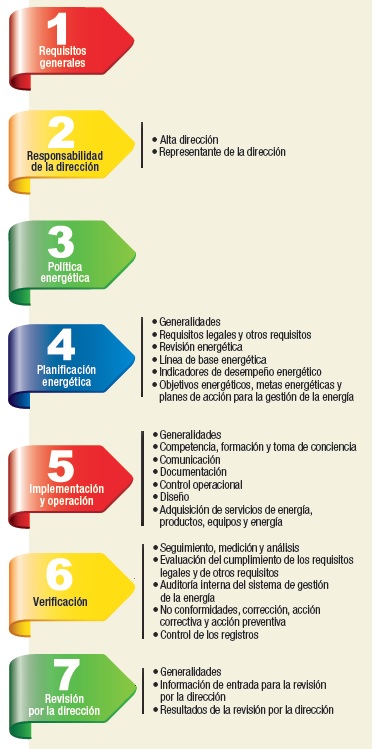
This standard specifies requirements for establishing, implementing, maintaining and improving an energy management system, allowing Tissat to have a systematic approach and thus achieve continuous improvement in energy performance, including energy efficiency, energy security, energy use and consumption. This certificate helps Tissat continually reduce its use and its costs of energy and the emission of greenhouse gases.
 
The application of this standard for about two years as well as the monitoring of the best practices established by the “European Code of Conduct for Data Centers”, along with other measures that accompany and support this standard (ex. DCIM system) have allowed to the Tissat’s Data Center Walhalla reaching a PUE of 1.15, measured according to the strict and continuous level measurement of type 3 defined by ASHRAE, the Green Grid, the Uptime Institute and so on.
 
Note: This TISSAT certification have been recently improved by the AENOR’s EA0044:2013 Data Centres Energetic Sustainability Certification,  that  accredits that a Data Centre accomplishes with the established energy audits, as well as energy and carbon footprint management systems, contributing to mitigate climate change.
 
 
Requisitos establecidos y compromisos adquiridos ISO 50001

miércoles, 26 de junio de 2013

IT evolution boosted by the “Functional Diversity"

For everybody who understands Spanish, I recommend this 10 minute video that review the IT evolution to explain (with subtle humor sense, since the interviewer is Guillermo Fesser, a Spanish humorist, one of members of comic duo “goma-espuma”, i.e. “foam rubber” in English) how initially expensive IT devices developed for handicapped people now have become cheap and commonly used gadgets. At the end, the video claims for the “Functional Diversity” as a new positive concept, instead of disability or handicap, and a revitalizing incentive that boosts innovation.
 
Note: the term “divertad” is an invented word, resulting of contraction of two Spanish words: “diversidad” y “libertad”, used for Javier Romañach (the interviewed human rights activist, who also is an Internet pioneer in Spain) to say goodbye.
 
Hereafter, I quote Javier’s Word:


Un vídeo de 10 minutos para estudiantes de tecnología:
 
 Javier Romañach
Salud y divertad,
Javier Romañach

viernes, 21 de junio de 2013

Private Cloud vs. Public Cloud (one of the discussion panels at Forecast 2013)

A few day ago Bhargavi Srivathsan publishes a post in the Open Data Center Alliance website fostering an interesting discussion about comparison between Private Cloud and Public Cloud. This discussion was going to be analyzed in detail in ad-hoc panel in the Forecast 2013, on June 18th. Unfortunately I could meet that panel (I’m based in Spain), so maybe other ideas were added to the ones stated by Bhargavi in its post (in fact, the idea of Bhargavi was to warn and prepare the discussion in Forecast 2013).
 
I disagree with some of the point that Bhargavi said in its blog. So let me first copy the main Bhargavi’s paragraphs:
 
What is a Private Cloud? It is a complete cloud infrastructure that is dedicated to the needs of a single organization, typically implemented within the firewall of the organization employing internally available resources and controlled by the IT department. Now, how is this different from a public cloud? In a public cloud, the services are delivered over a network that is open to public access and data travels through an un-trusted network.
 
So is private cloud better than public cloud? It depends. There is definitely a choice to make. While private and public clouds share several architectural similarities, there are clear differences. A private cloud solution comes with the following advantages: 
  • Better control over data (and data security)
  • Ability to balance and provision resources with very little turnaround time
  • Better risk control 
Obviously, there are some disadvantages in choosing a private cloud. Private clouds generally more costs upfront – there are costs associated with maintenance, planning for redundancy to avoid data loss, involving additional personnel to handle all operations in-house.
 
 
So let me show my opinion about:
 
First, according to NIST Cloud definitions, Private Cloud could be operated for the same organization that uses it (as Bhargavi stated) but also for an external provider (e.g., we offer that services to our Customers).
 
Second, in order to be a real and authentic Cloud it should be mutitenancy (NIST definition again), that implies that the Private Cloud, although dedicated to the same company/organization, the infrastructures are shared between different department of that company: each one of them becomes a different tenant; evidently, usually, that implies big companies (see Note 1). So, in general, the “ability to balance and provision resources” is not a difference with the Public Cloud: this issue is roughly the same in both Public and “real” Private Clouds. However, I agree with the other 2 points a Private Cloud offer both better control over data (and data security) and better risk control that Public Cloud.
 
Finally, I also agree with Bhargavi that one disadvantage of the Private Cloud is the price: it’ll be more expensive than the Public Cloud either you own it, or you uses the services of a provider; part of the facts for that are the ones Bhargavi said, but for me there’s one more important (because, in some way, it is mostly the root cause of them): in spite of a real multitenant (departments of a large company) the usage percentage of infrastructures of Private Cloud will be, in general, lower that the Public Cloud usage percentage, so the Public Cloud prices can be cheaper because of the better usage of infrastructures, better usage of technicians operating the cloud, and so on.
  
Note (1): For not large enough companies the “Community Cloud” could be the answer if “private” approach is needed; in this model, according to NIST definition, the cloud infrastructure is provisioned for exclusive use by a specific community of consumers from organizations that have shared concerns, e.g., mission, security requirements, policy, and compliance considerations; besides, as in the case of private cloud, the cloud may be owned, managed, and operated by one or more of the organizations in the community, a third party, or some combination of them, and it may exist on or off premises).

jueves, 13 de junio de 2013

Reasons for Data Centres Energetic Sustainability Certification

As announced in my last post  today I resume the subject of Data Centres Energetic Sustainability Certification and the AENOR EA 0044.2013 Technical Specification, publishing an interview made to my coworker Nuria Lago, who lead our certification process, about the TISSAT’s reasons for and the results of this certification.
 
Note: once again I apologize for not translating this interview, but for people that don’t understand Spanish, on-line translators will do better than me.
 
 
¿Qué fue lo que motivó a Tissat a adoptar esta especificación técnica de sostenibilidad en los centros de datos?
En primer lugar, la diferenciación frente a otros posibles actores del sector. De esta manera, TISSAT ofrece a sus clientes mejores garantías y responde a los más altos niveles de exigencia en aspectos de valor para los mismos, en particular en el ámbito de la sostenibilidad. Y, en segundo lugar, afianzar la reputación e imagen de la compañía, asociando nuestra marca a los últimos y más exigentes estándares, en este caso de eficiencia y sostenibilidad.
 
 
¿Cómo fue el proceso de implantación? ¿Qué retos y fortalezas encontraron?
Para una empresa de Tecnologías de la Información, suponía un gran reto orientarse hacia la industrialización de procesos, pues no es nuestro core de base de negocio. Así, esta certificación constituye una gran oportunidad para ampliar la perspectiva de negocio y reenfocar la explotación de los servicios a través de la eficiencia de energía, y por ende, la reducción de costes. También nos ha permitido tener una percepción mejorada sobre la prestación de los servicios de extremo a extremo, ampliando la visión hacia la parte de energía.
 
 
¿Qué reducciones de consumos energéticos han registrado?
Estamos muy enfocados al retorno de la inversión, puesto que la sostenibilidad y eficiencia contribuyen a optimizar los costes energéticos de los Centros de Procesos de Datos, maximizando así el beneficio obtenido en la operación de los mismos. Se trata de una pieza clave, ya que nuestro consumo energético es extremadamente elevado debido a la infraestructura tan compleja con la que se opera (Sistema de Alimentación Ininterrumpida, iluminación, climatización, equipamiento TI, motores, etc.) por lo que cualquier ajuste, por pequeño que parezca, supone un gran ahorro a largo plazo. El sistema de Gestión de Energía y la Huella de Carbono permiten tener una visión clara sobre qué medimos, dónde estamos, pero sobre todo a dónde queremos llegar. Supone incorporar un sistema que te permite aprender, mejorar cada día, y optimizar consumos prácticamente mes a mes, sabiendo además que estás contribuyendo a reducir las emisiones de CO2.
 
 
¿Cuáles son a su juicio las ventajas más destacadas de esta certificación?
Tissat es una empresa de misión crítica con un gran volumen de servicios que se prestan a través de sus Centros de Procesos de Datos, por lo que es muy importante poder demostrar la excelencia de su operación. Además, Walhalla es un Datacenter de última generación, que representa un modelo de industrialización de CPD con diseño y desarrollo propio, preparados para albergar servicios de cloud computing y con capacidad para ofrecer alojamiento en el ámbito internacional.

jueves, 6 de junio de 2013

Data Centres Energetic Sustainability Certification

In my post of 06-feb-2013 I announced that TISSAT’s Walhalla was the first Data Center awarded with the AENOR’s Data Centres Energetic Sustainability Certification. Note: Walhalla is also Tier IV certified by The Uptime Institute.
 
As explained in that post, AENOR’s “EA0044:2013” certification accredits that Data Centres accomplishes with the established energy audits, as well as energy and carbon footprint management systems, contributing to mitigate climate change. The result of all this certifies the Energetic Sustainability of TISSAT’s Data Centers, placed in Castellon and Valencia, a logical corollary of our continuous R&D and innovation processes in the Green Data Center área.
 
In short, EA0044:2013 Technical Specification, AENOR certifies that:
  • TISSAT has realized an energy audit of Walhalla according to UNE 216501,
  • the results and improvement proposals resulting from that audit have been included in the Tissat’s ISO-50001:2011 certified EMS (Energy Management System),
  • and that carbon footprint has been calculated accomplishing the ISO 14064-1.
 
Please let me speak something more about what is that certification and how it can be achieved. However I‘m going to do in Spanish, since I’m going to copy some paragraphs from an AENOR’s paper just published in website (http://www.aenornet.es/revistaune/pdf/mayo13/28mayo13.pdf):
 
La Unión Europea ha aprobado algunas disposiciones regulatorias en materia de residuos, sustancias peligrosas y consumo de energía de aparatos eléctricos y electrónicos comúnmente utilizados en CPD. También ha publicado un código de buenas prácticas para este tipo de servicios, cuyos requisitos, específicos para el sector de las TIC se han adoptado en la especificación AENOR EA 0044:2013, de sos­tenibilidad energética en CPD.
 
La auditoría energética aporta información acerca del estado y comportamiento energético de la instalación en un momento dado: sus posibilidades de mejora, potencial de ahorro energético y económico, repercusiones de  las mejoras en el mantenimiento así como las inversiones asociadas. Es imprescindible para una correcta realización de la auditoría energética definir tanto su ámbito físico, como el alcance técnico de la auditoría. En el siguiente cuadro se muestran las fases de una auditoría energética:
 
Etapas de Auditoría Energética-AENOR
 
 
Para asegurar la validez de los datos aportados por la auditoría energética, se debe verificar que ha sido realizada y documentada por personal competente, de acuerdo con lo establecido en la Norma UNE 216501 sobre auditoría energética o en futuras normas internacionales reconocidas por las partes interesadas implicadas.
 
Por su parte, el Sistema de Gestión de la Energía aporta información acerca del uso y consumo de la energía, las variables que afectan al desempeño energético del CPD, el propio desempeño energético y su evolución mejorada frente a una o varias líneas base de referencia establecidas, así como las prácticas para el diseño, adquisición de datos, medición, documentación e información sobre la energía. El servicio de CPD debe asegurar que  cumple los requisitos establecidos y los compromisos adquiridos en su política energética declarada de acuerdo con la Norma UNE-EN-ISO 50001:2011. Asimismo, la implantación y mantenimiento del Sistema de Gestión de la Energía también debe realizarse y documentarse de acuerdo con lo establecido en la mencionada norma y realizarse por personal competente.
 
Por otra parte, el cálculo de los Gases de Efecto Invernadero (GEI) aporta infor­mación acerca del desarrollo e imple­mentación de estrategias y planes de reducción de estos gases en el servicio de los CPD, facilitando su seguimien­to anual y el progreso en la reducción.
 
Resulta ineludible determinar los límites objeto del cálculo de las emisiones y remociones (en su caso) de estos gases, con el fin de disponer de una misma base comparativa e identificar actividades y acciones destina­das a la mejora de la gestión de los mismos. Para ello, la Huella de Carbono de la prestación del servicio de los CPD deberá asegurar lo establecido en la Norma UNE-EN-ISO 14064-1 y en el GHG Protocol, como se esquematiza en el siguiente cuadro:
 
Fases del Cálculo de Emisiones GEI-AENOR


Probably next post I resume this subject, publishing an interview made to my coworker Nuria Lago, who lead our certification process, about the TISSAT’s reasons for and the results of this certification.
 
 
Note. AENOR is the Spanish Association for Standardization and Certification, that was founded in 1986, and is working in more than 60 countries, been among the 10 most important certification organizations in the world, and contributing to improving the quality and competitiveness of companies, their products and services.